
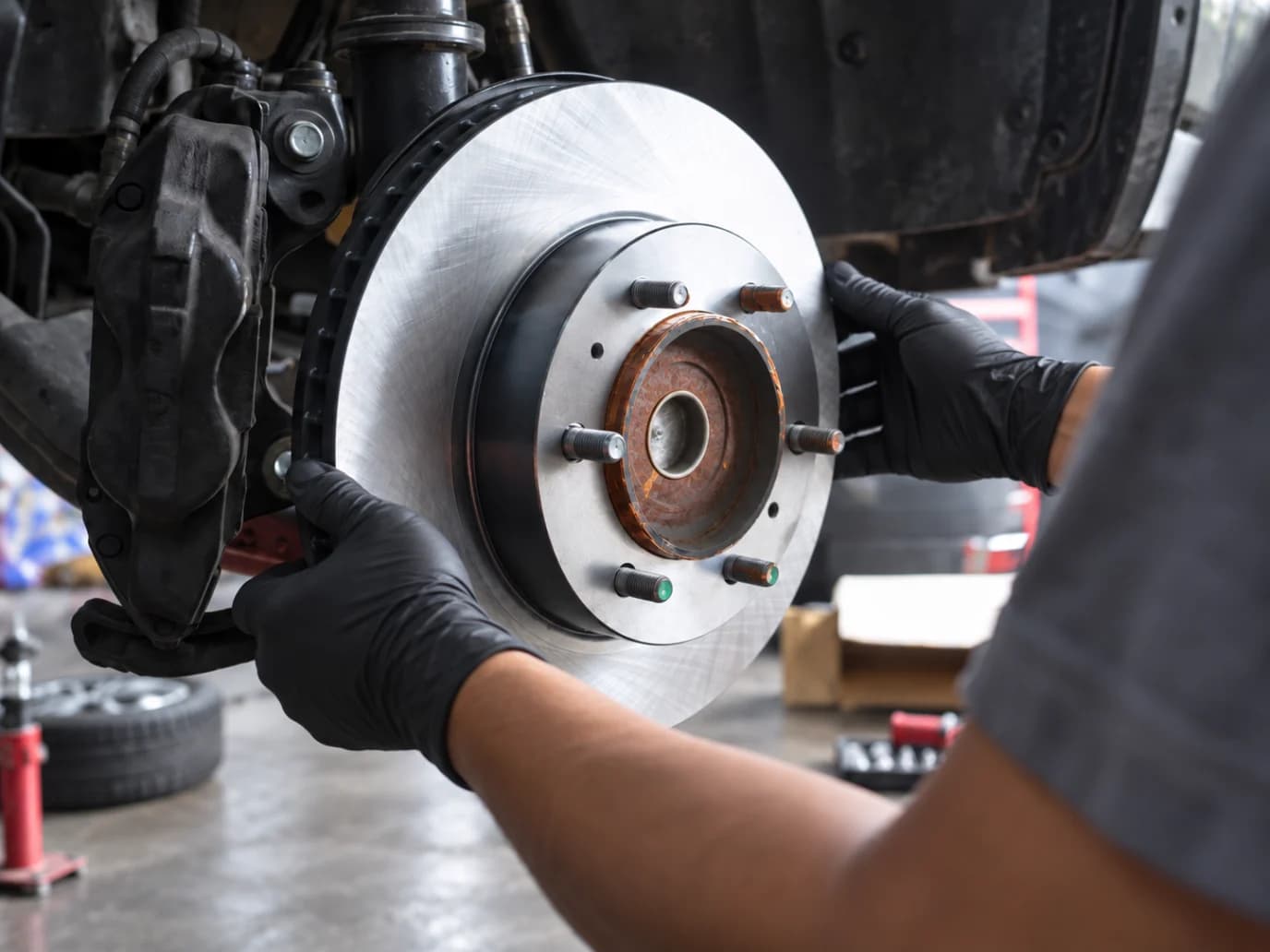
Every service you offer deserves its own page, but not every page should say the same thing with different words swapped in. A customer looking up tires and a customer looking up a brake noise are asking different questions, and a page that answers the wrong question loses them before they ever pick up the phone. Here is what each of the most common pages actually needs.
A tire page
Someone landing on a tire page is usually comparing options and trying to get a sense of cost before calling. A strong tire page includes:
- What kinds of tires you carry or can order: all-season, winter, performance
- Whether you offer installation, balancing and disposal as part of the job
- Rough guidance on how pricing works, tied to vehicle type, without needing an exact quote up front
- A simple way to request a quote for a specific vehicle and tire size
- Anything seasonal, like winter tire swap scheduling, mentioned plainly
The goal is to get a visitor from "how much for four winter tires" to a submitted request without making them call first just to get a starting number.
A brake page
Brake customers are often a little more anxious than tire customers, because a noise or a soft pedal feels like a safety issue, not a maintenance one. A brake page should:
- Describe the common symptoms plainly: squealing, grinding, pulsing, a soft pedal
- Explain, in a sentence or two, why an inspection usually comes before a firm price
- Mention what a typical brake job involves, without overpromising an exact cost before you have seen the vehicle
- Make it easy to request an appointment quickly, since brake concerns often come with urgency
A brake page that jumps straight to a price list without acknowledging the "is this safe to keep driving on" question misses what most visitors actually came for.
An alignment page
Alignment is a service a lot of customers do not fully understand, so this page carries more explaining than the others:
- A plain explanation of what alignment actually fixes: uneven tire wear, pulling to one side, a crooked steering wheel
- When it is usually needed: after hitting a pothole or curb, after new tires, or as routine maintenance
- How long the service typically takes, since this is often a same-day question
- A clear next step, whether that is booking directly or requesting a time
Because alignment is less familiar to a lot of customers than tires or brakes, a page that explains the "why" briefly tends to convert better than one that assumes the visitor already knows they need it.
A diagnostics page
Diagnostic visitors are the least certain of any customer type. They usually know something is wrong and have no idea what it will cost to find out. This page should:
- Set expectations clearly: diagnosis comes first, a repair estimate follows once the cause is known
- Mention what kind of equipment or expertise you have, especially for newer or more complex vehicles
- Address the most common version of "what will it cost to fix that noise" by explaining how the process works, even without a specific number
- Make requesting an appointment simple, since this customer usually wants an answer soon
A diagnostics page that pretends to offer a fixed price before any inspection tends to create frustration later. Being upfront about the process builds more trust than a guess would.
The pattern across all of them
Every one of these pages is answering a version of the same two questions: what happens if I contact this shop, and what will it roughly cost or involve. The details change by service, but the structure does not: explain the symptom or need in plain language, set honest expectations about pricing, and make the next step obvious.
What to check this week
Open your three or four highest-traffic service pages and read them the way a first-time visitor would. If any of them could be describing a completely different service with a few words changed, that page is not doing its job yet.
Get service pages built for how customers actually ask
Top Local Auto builds a dedicated page for every service you offer, written around the real questions customers bring to each one. It costs nothing to start, and it is 149 a month, month to month, if you keep it. Build your site and see your service pages done right.